‘The Gaze of Medusa’: after Sylvia Plath
Three authors (Hélène Frappat, Astrid Haerens and Ayşegül Savaş) engage in dialogue with Sylvia Plath’s poem ‘Medusa’ and write a new interpretation of the myth of Medusa. An evening of literary creation with La Monnaie, presented by Nicky Aerts.
category
Price
Discount
language
The power of women, the power of the gaze (that kills), an intimate relationship with the monstrous: the figure of Medusa is a powerful symbol of anger and power. Raped by Poseidon, transformed into a monster whose hair becomes a nest of snakes, Medusa turns anyone whose gaze meets hers to stone. Since time immemorial, she has been a canvas onto which artists, thinkers and writers have projected images and heightened feelings. Monster or protective power? This season too, Medusa is at the heart of an opera at La Monnaie.
A mysterious poem
A few months before she committed suicide in 1963, the American author Sylvia Plath put forward a blurred vision of this mythological figure in ‘Medusa’, which remains one of her most mysterious and widely discussed poems. A toxic relationship with her own mother? A critique of idealized motherhood? The poem is as moving and disturbing as the mythological figure that gives it its title.
Authors Hélène Frappat (France), Astrid Haerens (Belgium) and Ayşegül Savaş (Turkey) are coming to Brussels to write their vision of Medusa. The reading of their brand-new texts will be followed by a round-table discussion chaired by Nicky Aerts during which they will debate (in English) the importance of Plath’s poem and the possible incarnations of Medusa.
The texts by Astrid Haerens and Ayşegül Savaş will be subtitled in French. The evening will also feature a collaborative (and musical) work led by the Collectif Meute (opera singer Sarah Théry, stage director Claire Pasquier, oud player Akram Ben Romdhane).
About the authors
A philosophy graduate and film enthusiast, French author Hélène Frappat (b. 1969) is a novelist, film critic and translator. She has chosen to seek ‘truth’ in fiction. As a novelist, she is the author of Inverno, Lady Hunt, N’oublie pas de respirer, Le Dernier fleuve, Le mont Fuji n’existe pas, Trois femmes disparaissent and Nerona, published by Actes Sud. After devoting work to such film-makers as Jacques Rivette and Roberto Rossellini and actor Toni Servillo, in 2023 she published Le Gaslighting, ou l’art de faire taire les femmes.
Astrid Haerens (b. 1989) grew up in Zwevegem and lives in Brussels. She obtained a master’s degree in linguistics from the Conservatoire of Antwerp. She is the author of the novel Stadspanters and a collection of poetry, Oerhert, which won the 2023 First Poetry Collection Prize and was nominated for the Herman de Coninck Prize and the C. Buddingh’ Prize in 2023. Her second novel, Erosie, will be published in April 2026. Her work, which has not yet been published in French, has also appeared in various (international) literary magazines and on online platforms.
Ayşegül Savaş (b. 1986) grew up in Turkey and Denmark. She has been published in The New Yorker, The Paris Review and The Guardian, among others. She graduated from the San Francisco Art Institute and now lives in Paris. She is the author of White on White and The Anthropologists, one of Barack Obama’s favourite books of 2024.
About The Anthropologists:
‘An erudite and elegant meditation on modern life and modern love … Don’t be deceived by Savaş’s cool, matter-of-fact tone – beneath it lie layers of wisdom, delicacy and subtlety … [she] has created something remarkable.’
‘A meticulous chronicle of circumspection, a knowing assessment of the motions we go through in cities, and a portrait of aspiration... I found myself not wanting The Anthropologists to end.’
about the moderator
Nicky Aerts is a journalist and radio-maker. For the past twenty years, she could be heard on Radio 1, in the news service, and on Radio Klara. As a moderator, she regularly appears on literary and other stages.
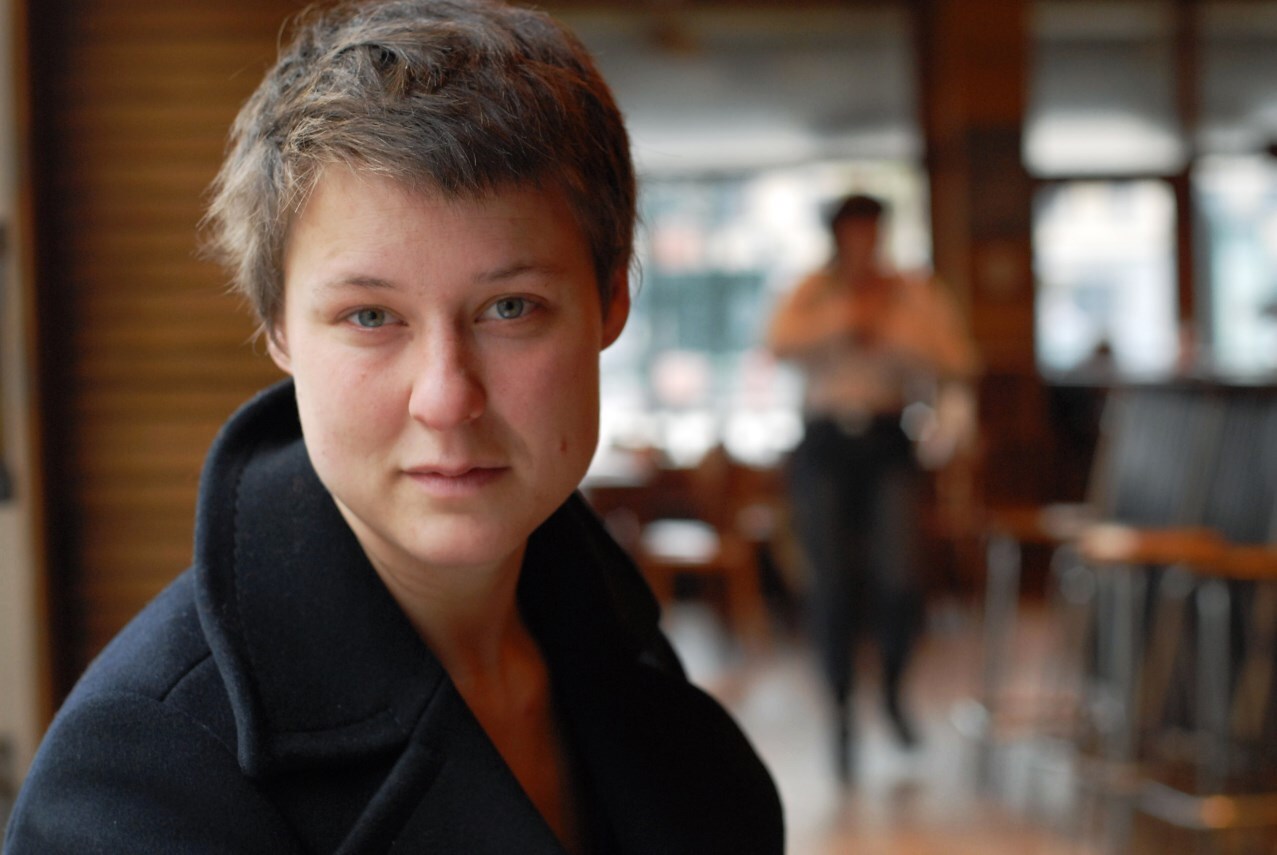
pictures: sylvia plath © bettmann (getty), astrid haerens © stine sampers, hélène frappat © céline nieszawer, aysegül savas © maks ovsjanikov
Our partners for this event
Soon at Passa Porta